When your ATCO Gas bill arrives after a brutal -30°C January week in Airdrie, that number stings. Then summer hits, your ENMAX electricity charges spike from running air conditioning through +30°C afternoons, and you’re caught in an endless cycle of high energy costs. Your large windows—the signature feature of Coopers Crossing, Windsong, and Ravenswood homes—are beautiful but thermally punishing.
This isn’t a generic insulation problem. It’s an Airdrie-specific challenge created by our 60-degree temperature swing between seasons, combined with the expansive glass surfaces that define modern prairie home architecture throughout our growing city. The solution? Cellular shades engineered specifically for extreme climates like ours.
Why Airdrie’s Climate Demands Specialized Window Coverings
The Hidden Energy Drain in Your Windows
Single-pane and even some double-pane windows in Airdrie homes lose up to 30% of heating energy during winter months (Source: Natural Resources Canada, 2022). When chinook winds create rapid temperature fluctuations—sometimes 20°C swings in a single day—your HVAC system works overtime trying to maintain consistent indoor comfort.
Walk through any neighbourhood near Nose Creek Regional Park during January, and you’ll see frost patterns on windows indicating significant thermal bridging. That frost represents your heating dollars escaping directly through the glass. Modern prairie homes with floor-to-ceiling windows in developments like Ravenswood are particularly vulnerable, with window-to-wall ratios sometimes exceeding 40%.
How Cellular Shade Technology Creates a Thermal Barrier
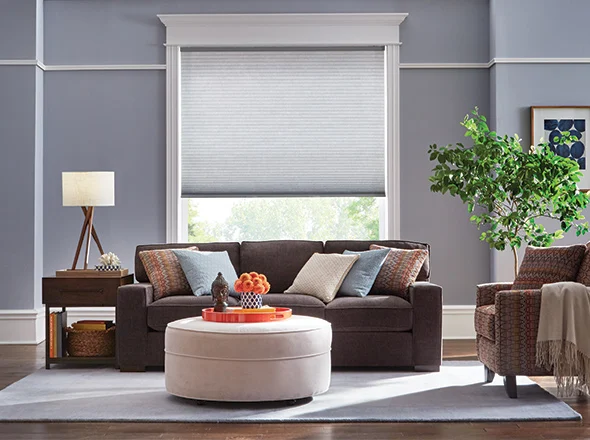
Cellular shades—also called honeycomb blinds—trap air in hexagonal pockets that act as insulation against both heat loss and heat gain. This trapped-air principle mirrors how double-glazed windows work, but adds another R-value layer to your existing glass.
According to the U.S. Department of Energy, cellular shades can reduce heat loss through windows by up to 40% during winter and reduce unwanted solar heat gain by up to 60% during summer (Source: U.S. Department of Energy, 2023). For Airdrie homeowners paying ATCO rates that increased 8.5% in 2023 alone (Source: Alberta Utilities Commission, 2023), that translates to measurable monthly savings.
| Window Covering Type | Winter Heat Loss Reduction | Summer Heat Gain Reduction | Best For |
|---|---|---|---|
| Single-cell honeycomb | Up to 25% | Up to 45% | Moderate climates |
| Double-cell honeycomb | Up to 40% | Up to 60% | Extreme climates like Airdrie |
| Triple-cell honeycomb | Up to 50% | Up to 65% | Maximum insulation priority |
| Standard blinds | 5-10% | 10-15% | Light control only |
Matching Cellular Shades to Airdrie’s Architectural Styles
Solutions for New Suburban Developments
If you live in Coopers Crossing or Windsong, your home likely features open-concept layouts with large window banks designed to maximize natural light and prairie views. These architectural choices look stunning but create thermal challenges that standard builder-grade window coverings cannot address.
Double-cell cellular shades with top-down/bottom-up functionality give you precise control over light and privacy while maintaining an insulating barrier. You can lower the top portion to let light flood your kitchen island while keeping the bottom raised for privacy from the street—all without sacrificing energy efficiency.
- Large picture windows: Motorized cellular shades eliminate cord hazards and ensure complete coverage on oversized glass
- Transom windows: Fixed cellular shades in hard-to-reach locations above doors and standard windows
- Sliding patio doors: Vertical cellular shades or specialized horizontal options that stack compactly
- Specialty shapes: Custom-cut honeycomb blinds for arched and angled windows common in modern prairie design
Addressing Common Window Configurations in Airdrie Homes
Your home near Genesis Place might have bay windows in the living room, clerestory windows in the stairwell, and a wall of glass facing west that turns your bedroom into a solar oven by 4 PM in July. Each configuration requires a tailored approach.
West-facing windows in Airdrie receive the most intense afternoon sun during summer, when solar heat gain peaks. Installing cellular shades with reflective backing on these specific windows can reduce cooling loads by up to 77% compared to uncovered glass (Source: ENERGY STAR, 2023). This targeted approach means you invest more in the windows that matter most and less in windows that don’t face direct sun exposure.
Real Energy Savings for Airdrie Homeowners
Calculating Your Potential Bill Reduction
The average Airdrie household spends approximately $2,400 annually on combined heating and cooling costs based on ATCO and ENMAX rate structures (Source: Alberta Energy Efficiency Alliance, 2023). Windows typically account for 25-30% of residential heating and cooling energy use (Source: U.S. Department of Energy, 2023).
“We installed double-cell cellular shades on all 14 windows in our Windsong home last October. By comparing our ATCO bills to the previous winter, we calculated savings of roughly $47 per month during the coldest months. The shades paid for themselves in under two heating seasons.”
— Michael R., Windsong, Airdrie
Your specific savings depend on several factors unique to your home:
- Window age and quality: Older single-pane windows benefit most dramatically from cellular shade installation
- Home orientation: South and west-facing windows in Airdrie homes offer the highest ROI on insulating window coverings
- Current HVAC efficiency: If your furnace or air conditioner is older, reducing the load extends equipment life while cutting bills
- Thermostat habits: Homes kept at consistent temperatures see more benefit than those with dramatic setbacks
- Window coverage discipline: Closing cellular shades at night during winter and during peak sun hours in summer maximizes savings
Beyond Energy: Additional Benefits for Your Airdrie Home
Energy savings drive most Airdrie homeowners to consider cellular shades, but the secondary benefits add significant value:
- UV protection: Cellular shades block up to 99% of UV rays, protecting your flooring and furniture from fading caused by intense Alberta sunshine
- Noise reduction: The honeycomb structure absorbs sound, reducing traffic noise—particularly valuable for homes along Main Street or near busy intersections
- Consistent comfort: Eliminate cold drafts near windows during January nights and hot spots during summer afternoons
- Increased home value: Energy-efficient upgrades appeal to buyers in Airdrie’s competitive housing market
Ready to see how cellular shades would look and perform in your specific home? Schedule your free in-home energy assessment and cellular shade consultation today.
Choosing the Right Cellular Shades for Alberta Conditions
Cell Size and Configuration for Maximum Insulation
Not all honeycomb blinds perform equally in extreme climates. For Airdrie’s temperature range, you need to consider cell size (the diameter of each honeycomb pocket) and cell count (single, double, or triple layer construction).
Larger cell sizes (typically 3/4″ or 1″) contain more trapped air and provide better insulation for big windows common in Coopers Crossing homes. Smaller cells (3/8″ or 1/2″) suit standard-sized windows and offer a more tailored appearance. Double-cell construction is the minimum recommendation for Alberta winters—single-cell options simply don’t provide enough thermal resistance when temperatures drop below -20°C.
Fabric Options That Make Sense for Your Lifestyle
Cellular shade fabrics range from sheer (light-filtering) to blackout, with several opacity levels between. Your choice should reflect both the room’s function and its orientation:
- Bedrooms: Blackout fabrics eliminate light intrusion—essential during Airdrie’s long summer days when the sun rises before 5 AM
- Living areas: Light-filtering fabrics maintain privacy while allowing natural light, reducing your need for artificial lighting
- Kitchens and bathrooms: Moisture-resistant fabrics prevent warping and mould in high-humidity spaces
- Home offices: Room-darkening options reduce screen glare without complete blackout
Families with young children in Ravenswood should consider cordless lift systems or motorized options that eliminate strangulation hazards while providing the same energy efficiency benefits.
“After getting quotes from three companies, we went with a local installer who actually understood Alberta building codes and could explain why certain options made sense for our home’s orientation. The difference in knowledge was obvious—they noticed things about our windows that the big-box store installers completely missed.”
— Karen T., Coopers Crossing, Airdrie
Installation Considerations for Airdrie Homes
Inside Mount vs. Outside Mount in Modern Prairie Architecture
Modern prairie homes in Airdrie often feature deep window frames with clean architectural lines. Inside-mount cellular shades fit within the window frame, preserving those clean sightlines and allowing trim details to remain visible. However, outside-mount installations provide better insulation by covering the entire window opening, including the frame where thermal bridging occurs.
For maximum energy efficiency, consider outside mounts that extend 2-3 inches beyond the window frame on all sides. This overlap blocks air infiltration around the window edges—the same gaps that let cold drafts into your Windsong living room on February nights.
Professional Measurement Matters
Airdrie homes built in the last decade often have windows that appear standard but measure slightly differently than factory specifications. A window that looks like a standard 36″ opening might actually measure 35 7/8″ or 36 1/4″. Professional measurement ensures your cellular shades fit precisely, eliminating light gaps and maximizing insulating performance.
Improper installation can reduce the energy efficiency of cellular shades by up to 50% due to air leakage around edges (Source: Lawrence Berkeley National Laboratory, 2021). Given Airdrie’s extreme temperature differentials, that’s not a compromise worth making.
Don’t leave money on the table with ill-fitting window coverings. Get a free quote with professional measurement included.
Frequently Asked Questions
How long do cellular shades typically last in Alberta’s climate?
Quality cellular shades installed in Airdrie homes typically last 7-10 years with proper care. The main factors affecting lifespan are UV exposure (which fades fabrics over time) and mechanical wear from daily operation. Motorized systems often outlast manual options because they eliminate cord stress and ensure even raising and lowering. Homes near Nose Creek Regional Park with significant tree coverage may see longer fabric life due to reduced direct sun exposure.
Can cellular shades be combined with existing curtains or drapes?
Absolutely—and this combination maximizes both energy efficiency and design flexibility. Installing cellular shades as the primary insulating layer, then adding decorative drapes creates a layered window treatment that exceeds either option alone. Many Coopers Crossing homeowners choose neutral honeycomb blinds for consistent street-facing appearance while adding seasonal or room-specific curtains inside. The cellular shades handle thermal performance while drapes add texture, pattern, and additional light blocking when desired.
Are there rebates or incentives for energy-efficient window coverings in Alberta?
While no direct provincial rebate currently exists specifically for cellular shades in Alberta, some ATCO and ENMAX efficiency programs periodically include window treatments as qualifying improvements. Additionally, ENERGY STAR-certified insulating window coverings may qualify for the federal Canada Greener Homes Grant program when combined with other envelope improvements. Check current program requirements before purchasing, as eligibility criteria change annually and whole-home assessments are often required.
Frequently Asked Questions
How long do cellular shades typically last in Alberta’s climate?
Quality cellular shades installed in Airdrie homes typically last 7-10 years with proper care. The main factors affecting lifespan are UV exposure and mechanical wear from daily operation. Motorized systems often outlast manual options because they eliminate cord stress and ensure even raising and lowering.
Can cellular shades be combined with existing curtains or drapes?
Absolutely—installing cellular shades as the primary insulating layer with decorative drapes creates a layered treatment exceeding either option alone. Many Coopers Crossing homeowners choose neutral honeycomb blinds for consistent exterior appearance while adding seasonal curtains inside.
Are there rebates or incentives for energy-efficient window coverings in Alberta?
While no direct provincial rebate currently exists specifically for cellular shades, some ATCO and ENMAX efficiency programs periodically include window treatments. ENERGY STAR-certified coverings may qualify for the federal Canada Greener Homes Grant when combined with other improvements.